Coprophagic Delights
MATTER IN THE WRONG PLACE
……
Essay by Florian Werner
……
Olaf (upon what were once knees)
does almost ceaselessly repeat
“there is some shit I will not eat”
……
I have always been intrigued and puzzled by these three lines from “i sing of Olaf glad and big” by American poet E.E. Cummings.
Not just because of the beauty of the cadence, both systematic and fluid. Not just because this formal beauty is contrasted so dramatically by the cruelty of the image. But because these three lines paradoxically seem to suggest that there is some shit that Olaf, as big and glad and brave as he is, in fact does eat. Some shit he won’t — other he will. But which?
Indeed, people have eaten feces since at least Biblical times — mostly, like Olaf, perforce. The Book of Ezekiel tells us that the prophet, as a divine punishment, had to bake his bread “with dung that comes out of man, in their sight.” (Later, he was allowed to use dried cow droppings instead.) During the Thirty Years’ War, a preferred method of torture was to force enemy combatants to drink cow manure; an enhanced interrogation technique supposedly preferred by Swedish troops and hence known as the “Swedish drink.”
And (moving from the realm of history to that of art): the sex slaves in Pier Paolo Pasolini’s film Salò, or the 120 Days of Sodom are coerced to dine on shit, albeit with silver cutlery and from plates. The gesture is as simple as it is effective: making somebody eat their own (or other mammals’) excrement is a signifier of absolute power, of absolute cruelty, of dehumanization. It relegates the human in question to the status of Escherichia coli and other intestinal bacteria. It puts him or her, in the truest sense of the word, at the very end of the food chain.
Coprophagia is one of the strongest — and one of the few truly universal—taboos, coming in second place only behind the master taboo of eating the dead. In fact, it is somewhat like eating the dead: after all, feces are, in a complex and disturbing way, a part of the human body. They are an “abject,” as the Bulgarian psychoanalyst, philosopher (and, as we have recently learned, secret agent) Julia Kristeva would say: like urine, semen, vaginal fluid, or pus, they are neither subject nor object, neither here nor there, both flesh and not.
In this way, shit questions the integrity of our body, our physical boundaries, our relation to the outside world, to space and time. On its way through the digestive system, it touches some of the deepest, most intimate, sensitive, and vulnerable parts of ourselves — then it (more or less) suddenly leaves the system and grows cold. Shit is like a dead corpse en miniature. (Conversely, a dead body is similar to a pile of feces and should not be mourned, as notorious misanthrope Arthur Schopenhauer once said.) Putting the word die back into digestion: every visit to the toilet is a little funeral march.
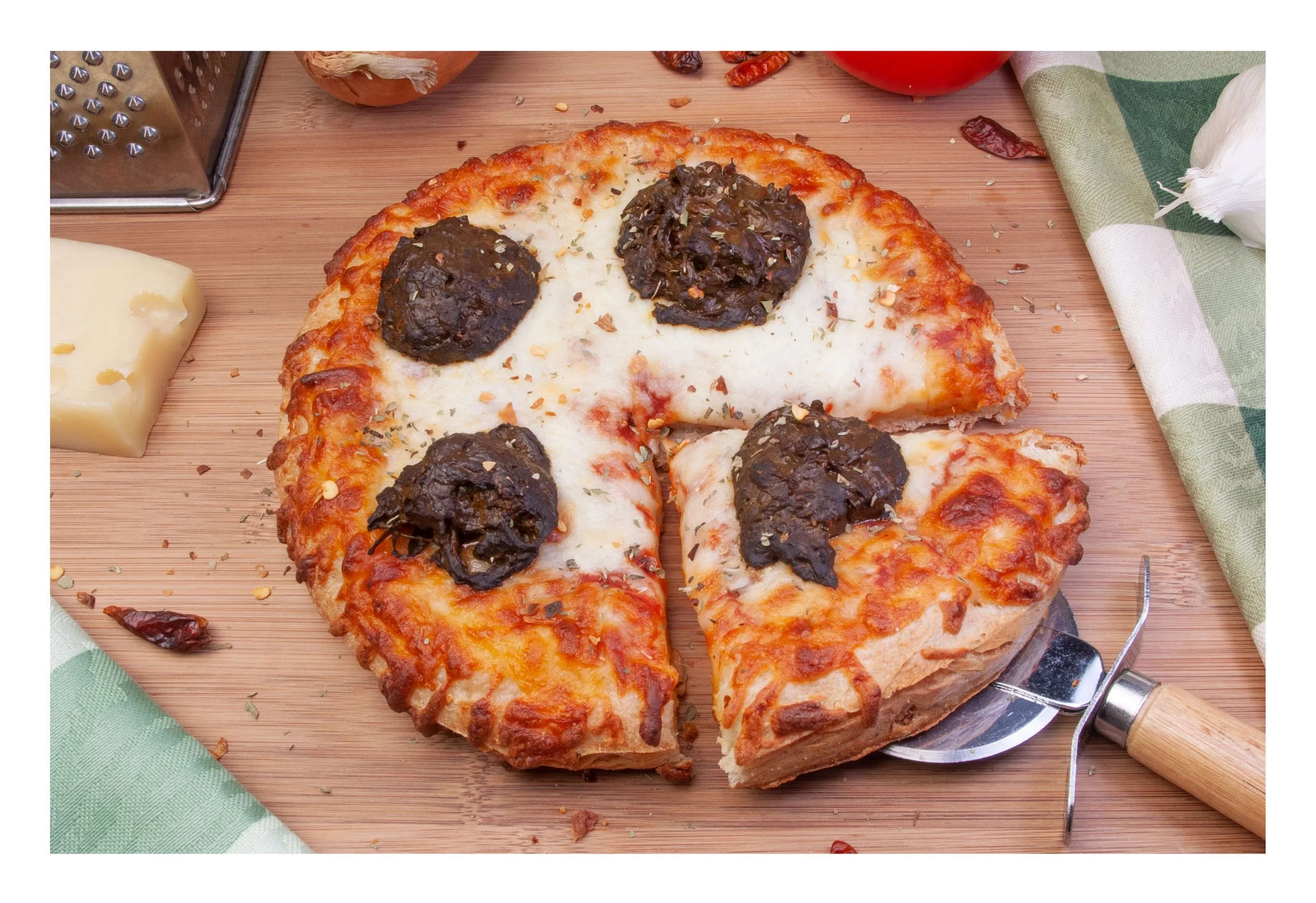
So there is a strong taboo against coprophagia — but rules need to be broken, taboos ask for transgression; in fact, that is the only way we know they are there. “The limit and transgression depend on each other for whatever density of being they possess,” as French philosopher Michel Foucault has written: “a limit could not exist if it were absolutely uncrossable and, reciprocally, transgression would be pointless if it merely crossed a limit composed of illuminations and shadows. But can the limit have a life of its own outside of the act that gloriously passes through it and negates it?”
Small wonder, then, that the taboo of coprophagia has time and again been challenged, passed through, negated (and thus in the same gesture paradoxically confirmed). Often enough in cruel deed and fact (see above) — for the most part, however, metaphorically: every time we tell another person to eat shit, to kiss or lick our ass (as the preferred German expression goes), or, as Bart Simpson has it, to eat my shorts, we playfully challenge, if ever so slightly, the taboo of coprophagia.
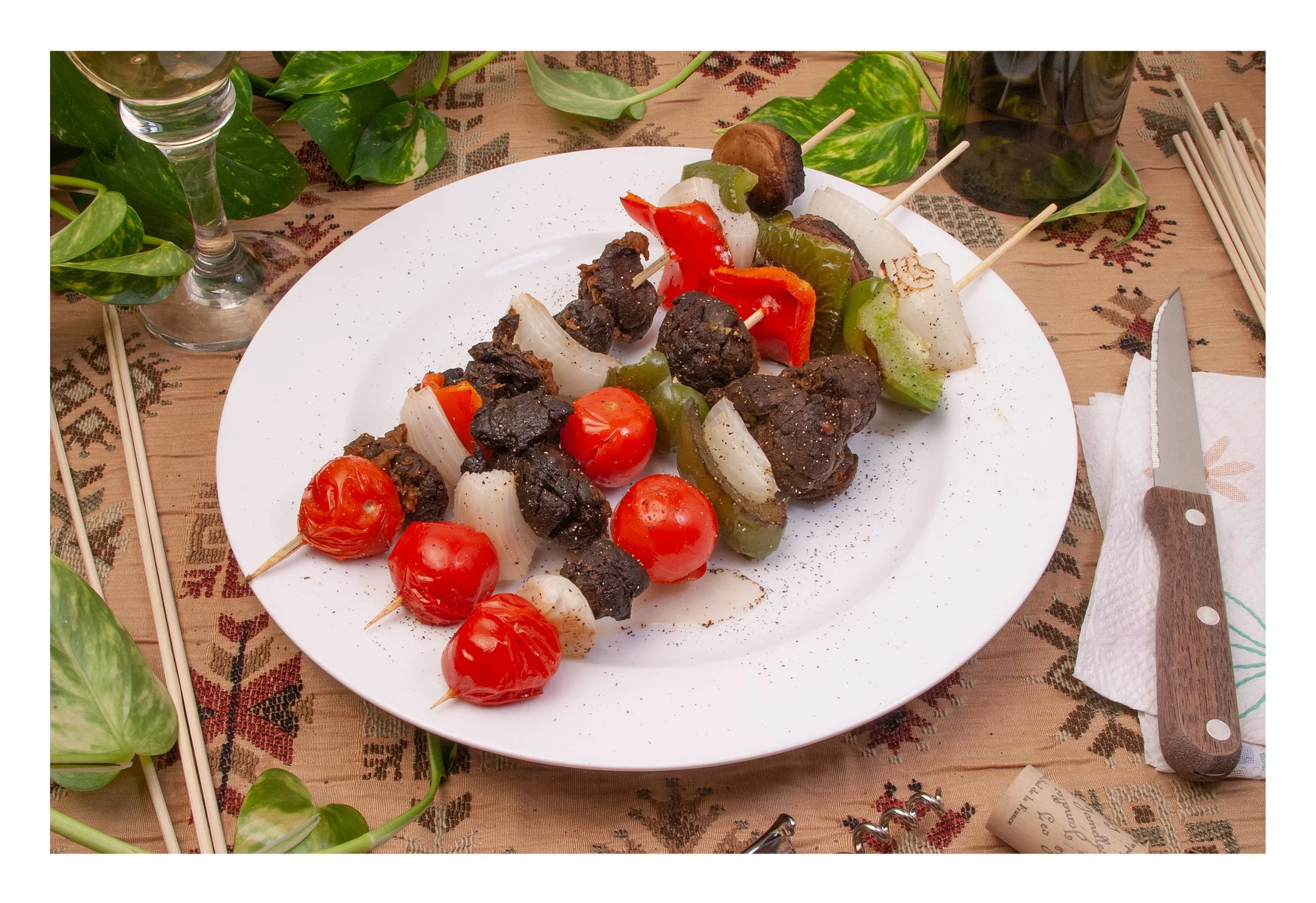
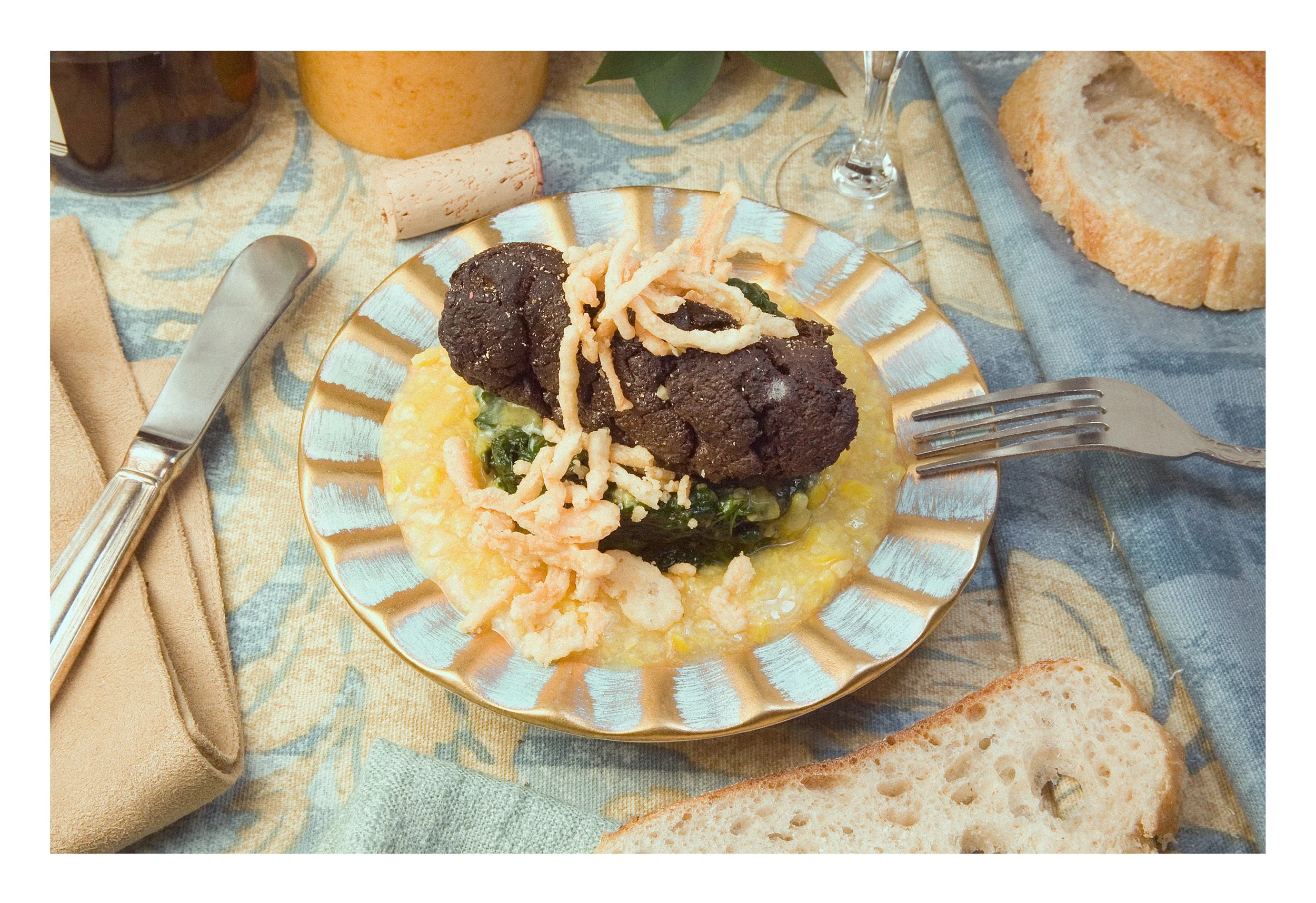
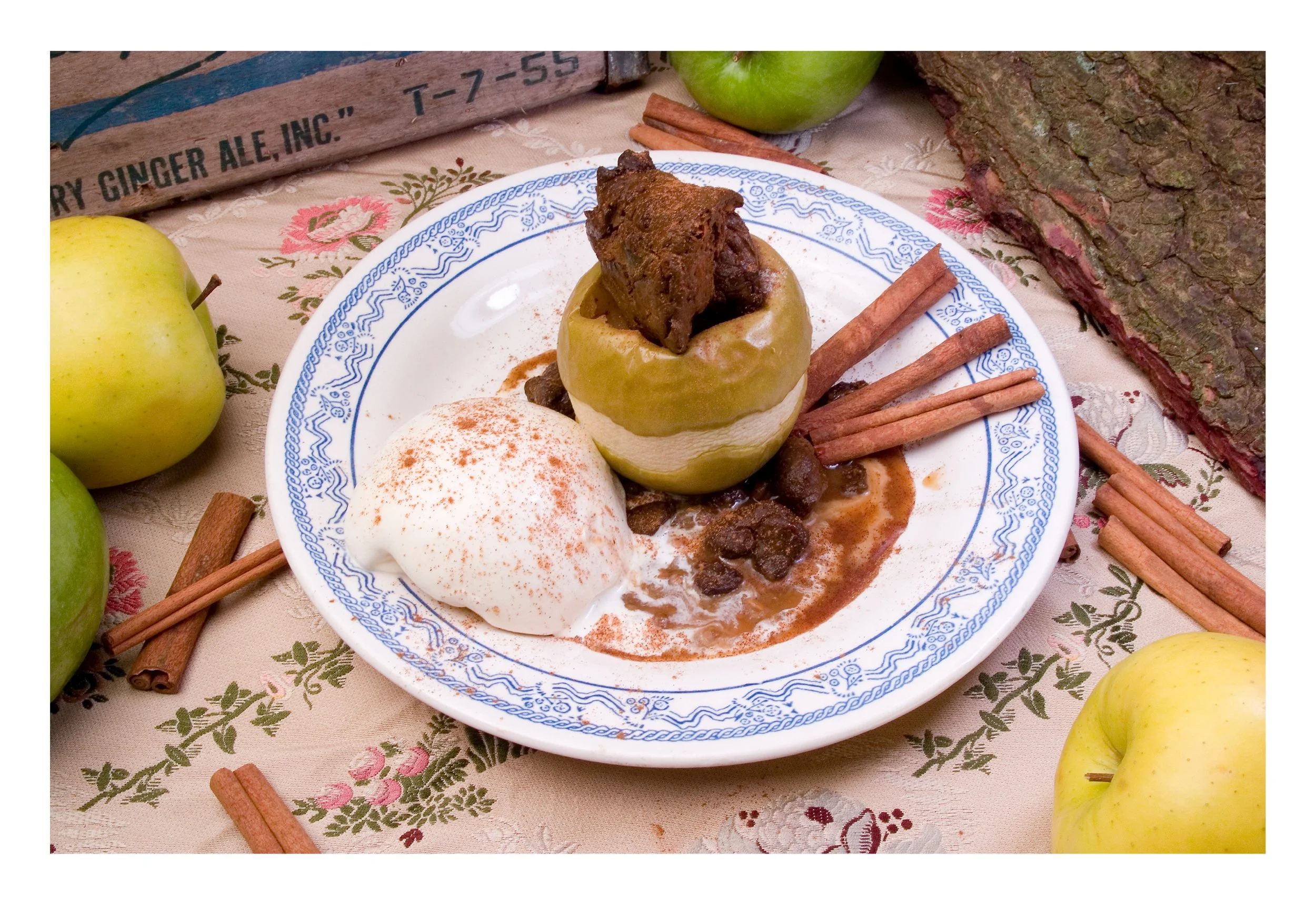
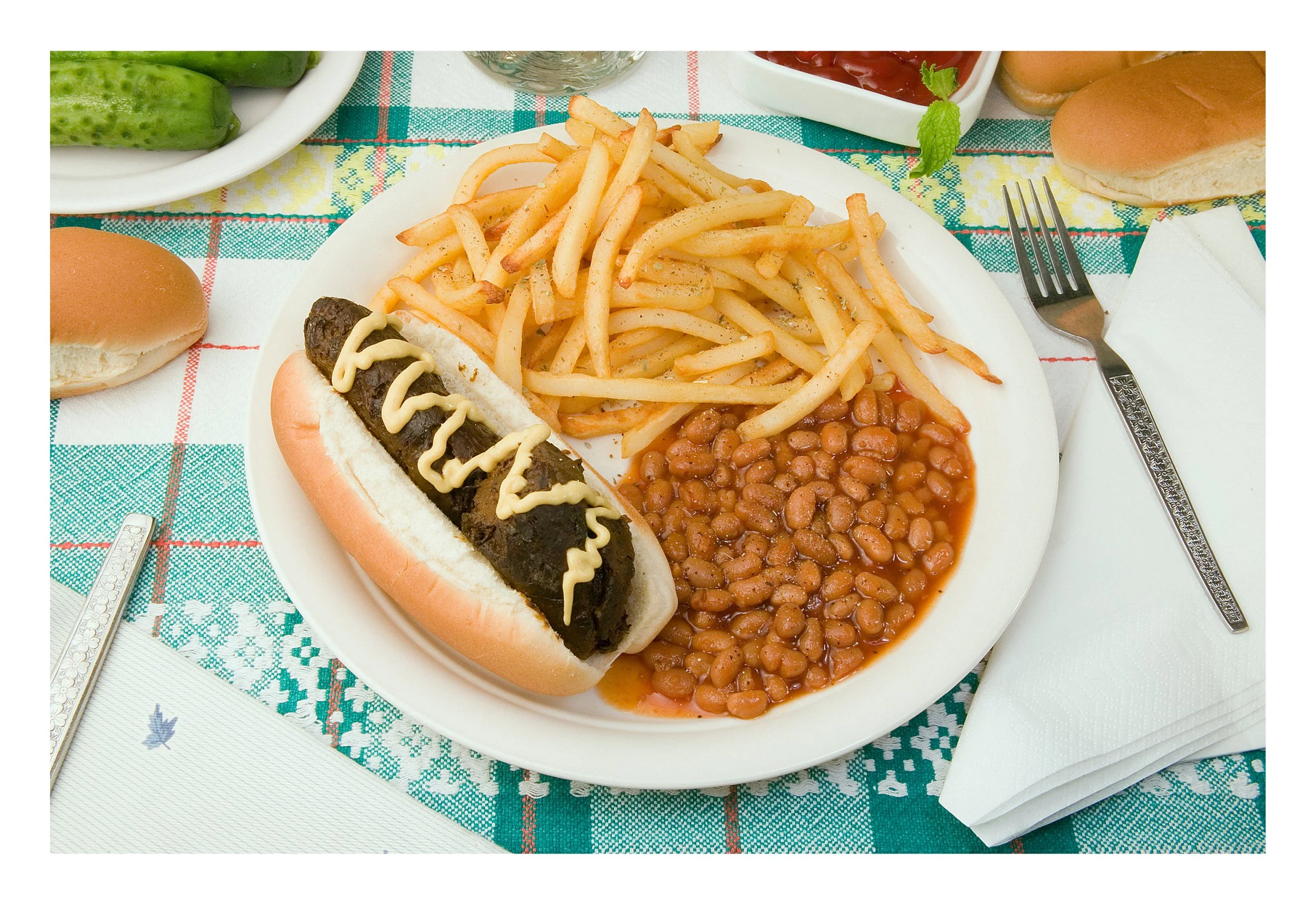
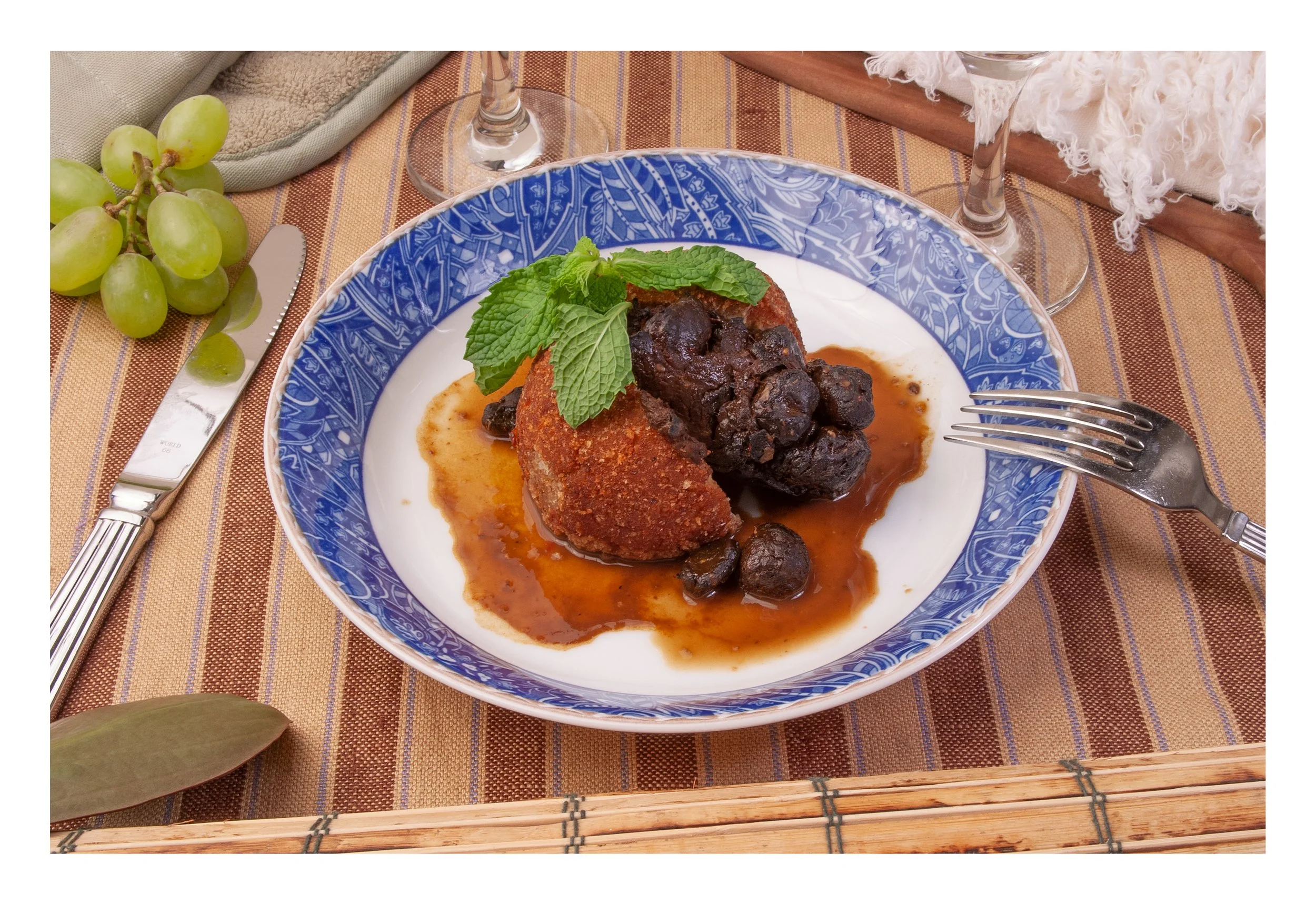
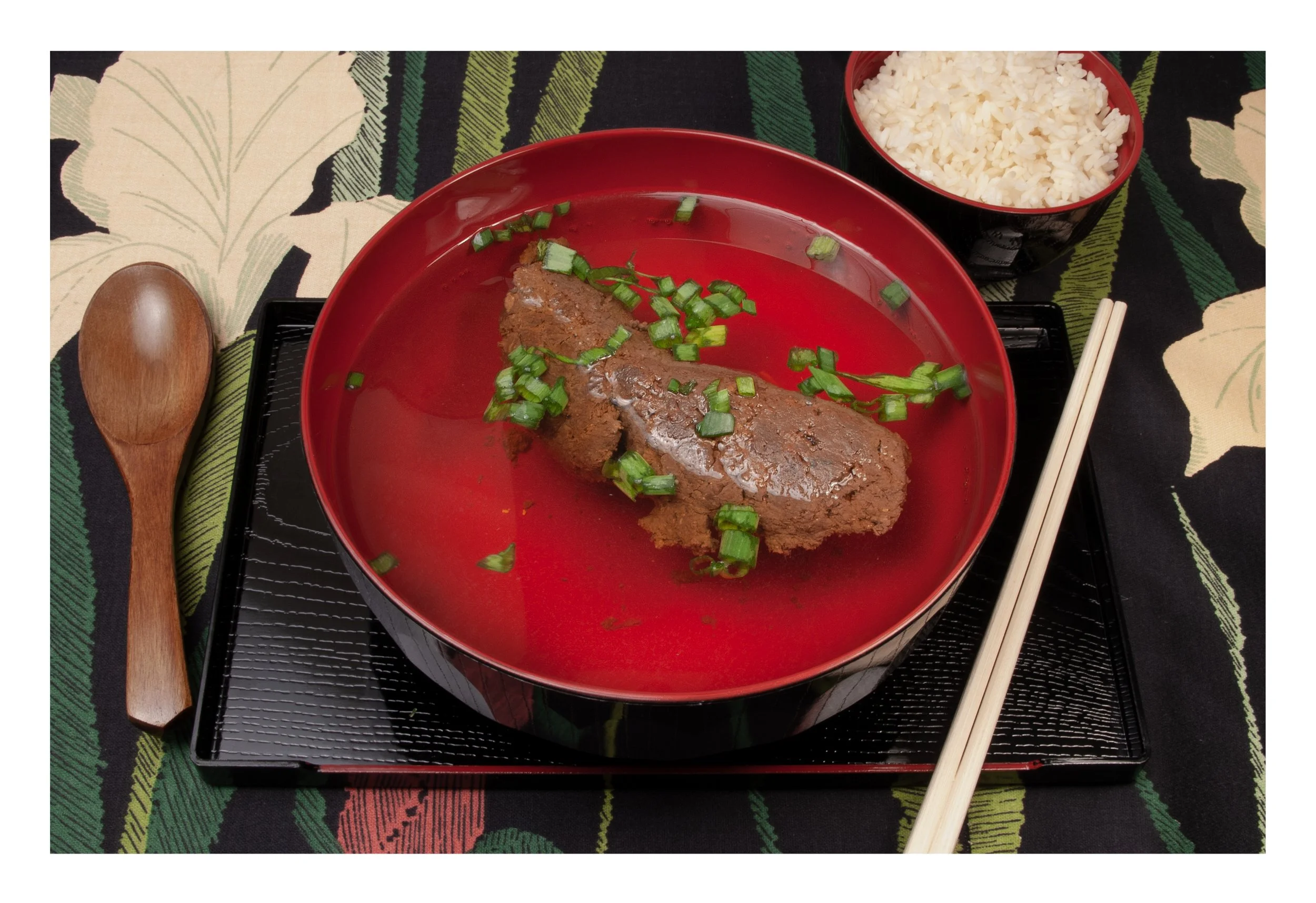
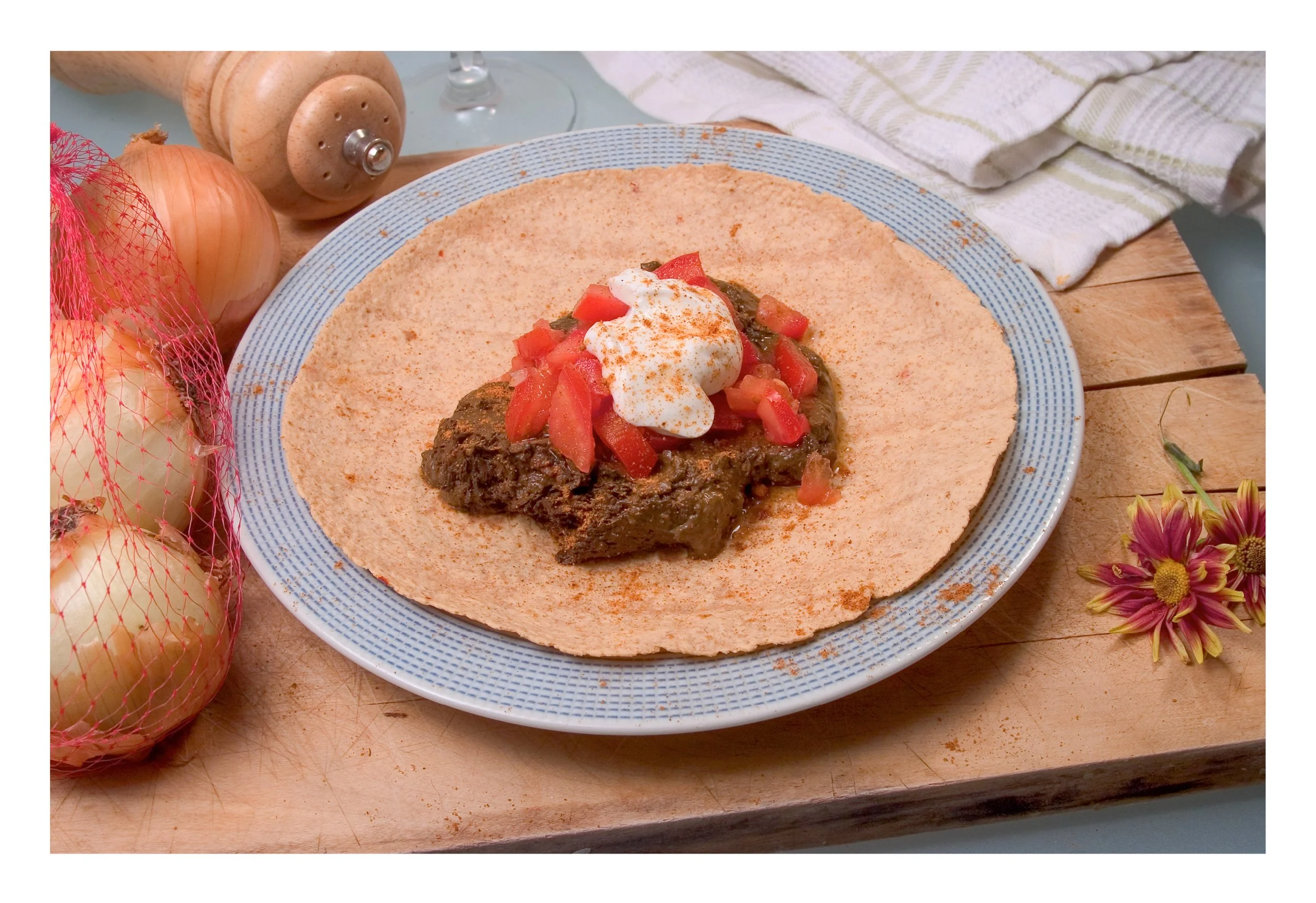
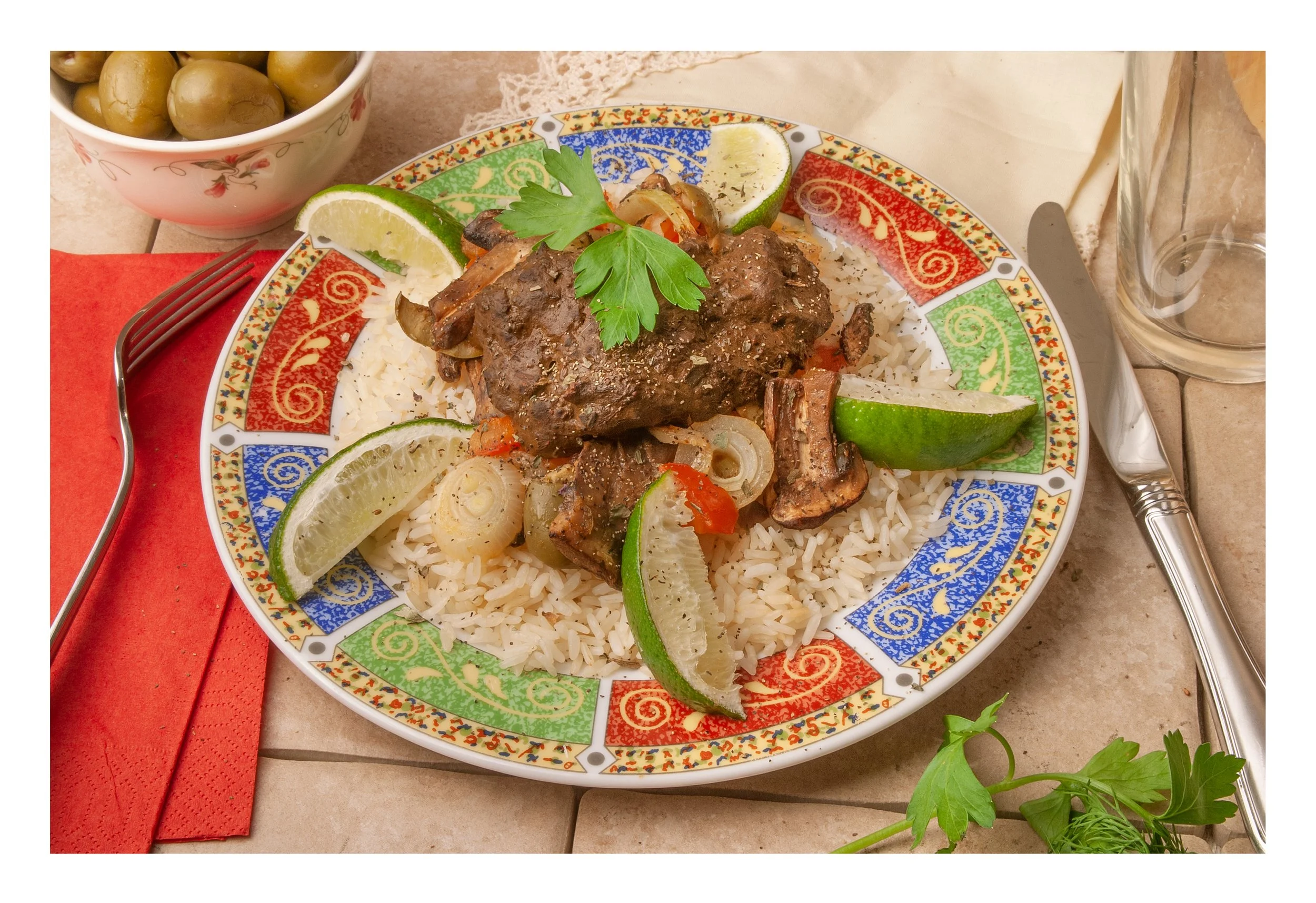
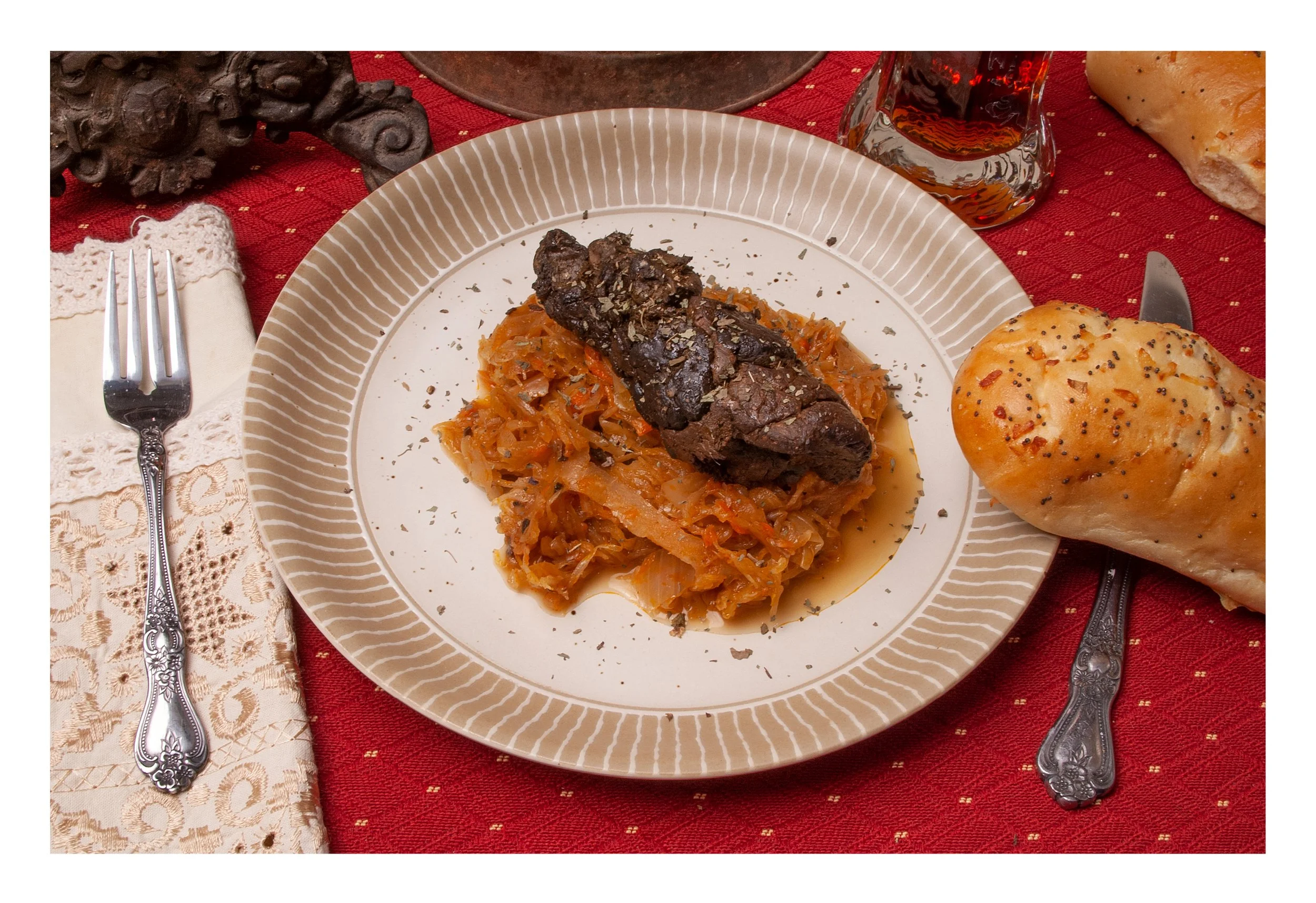
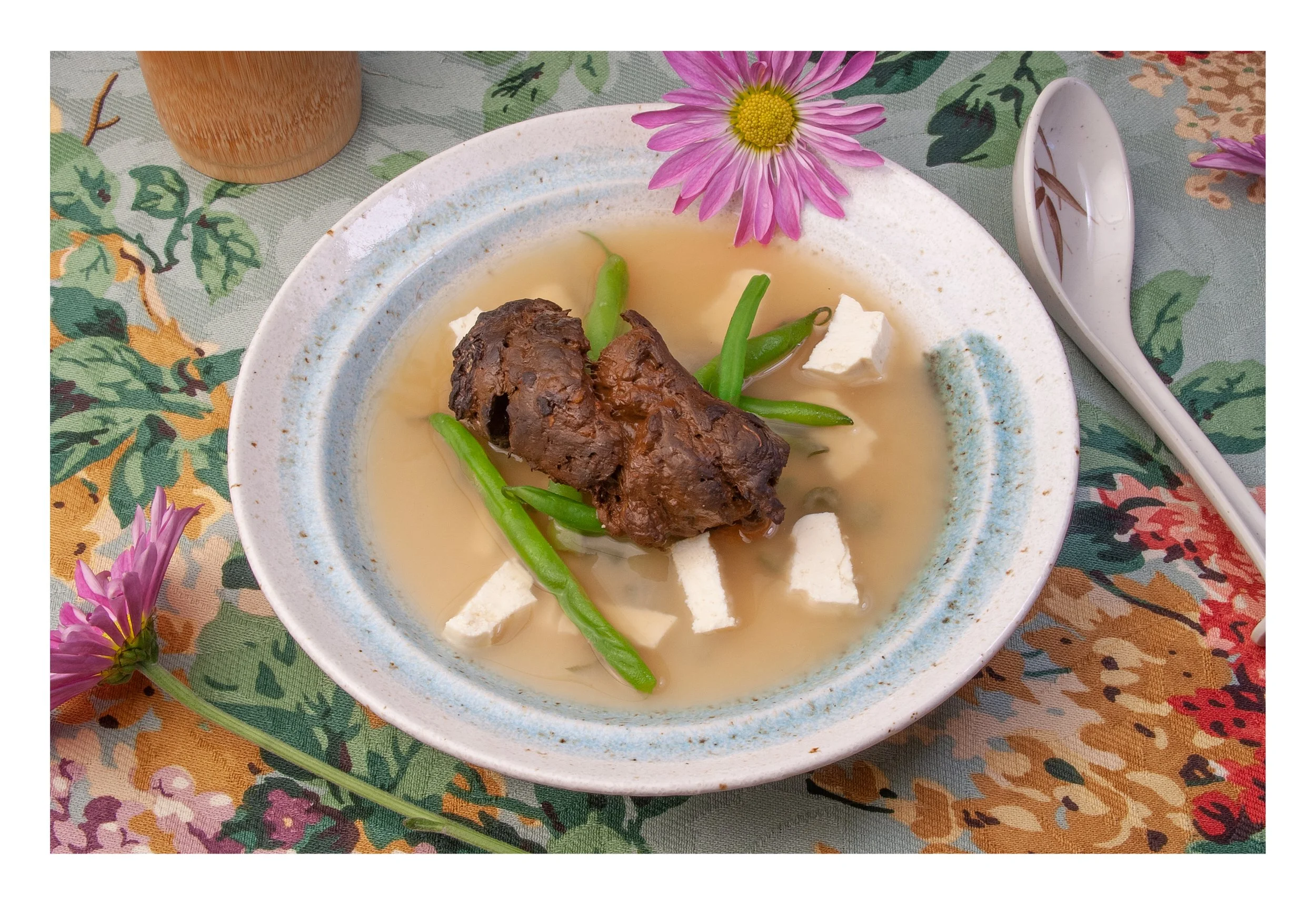
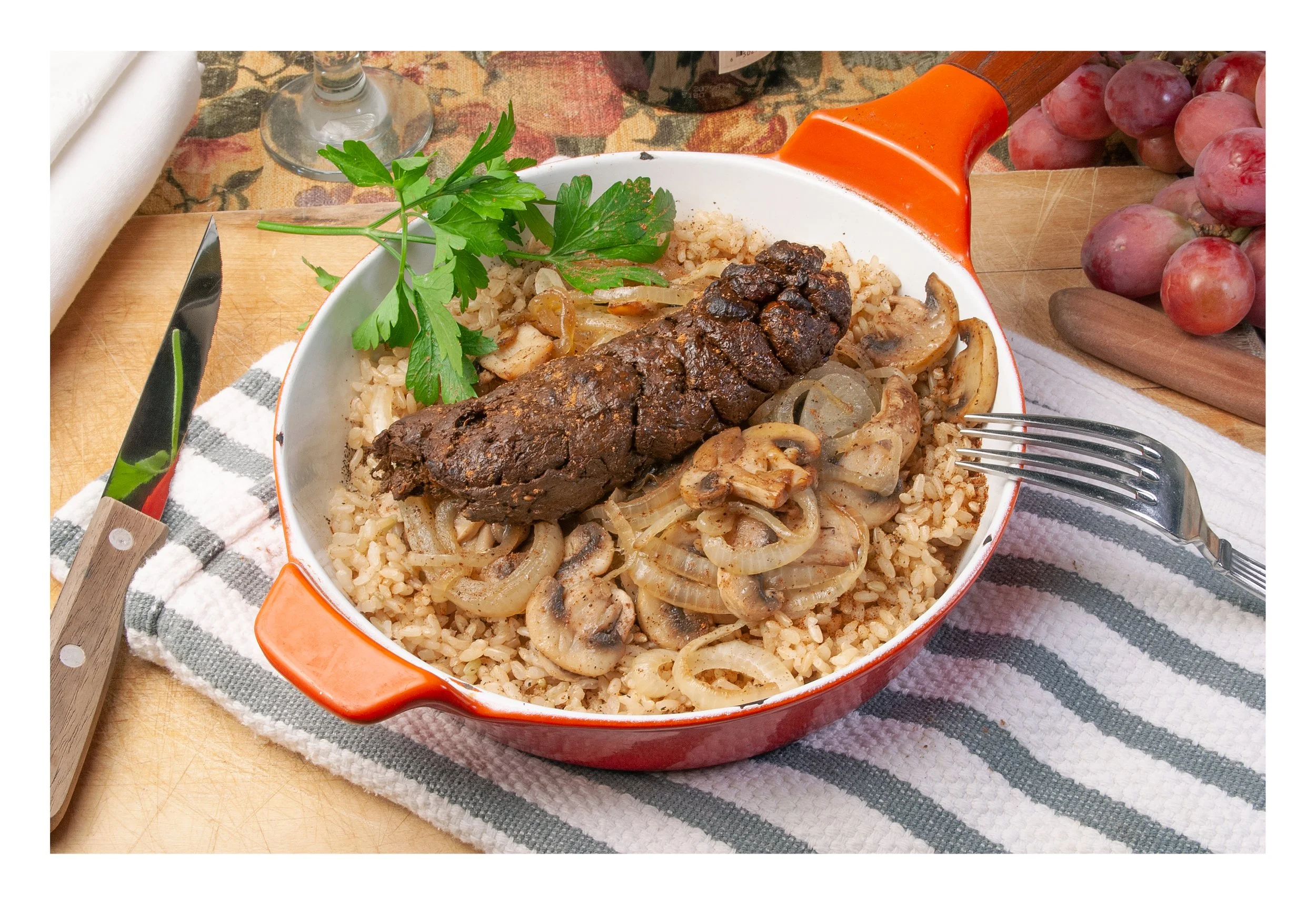
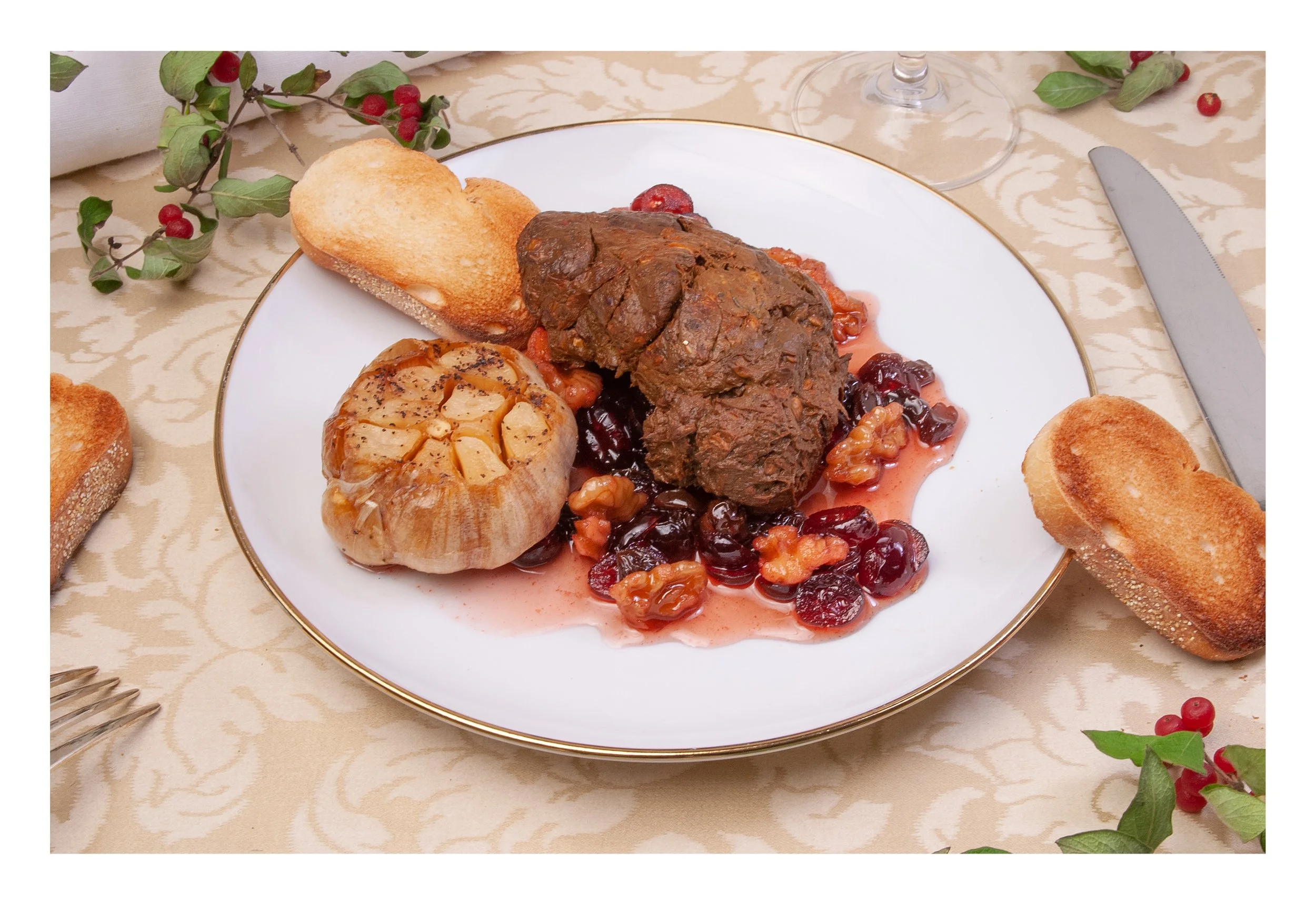
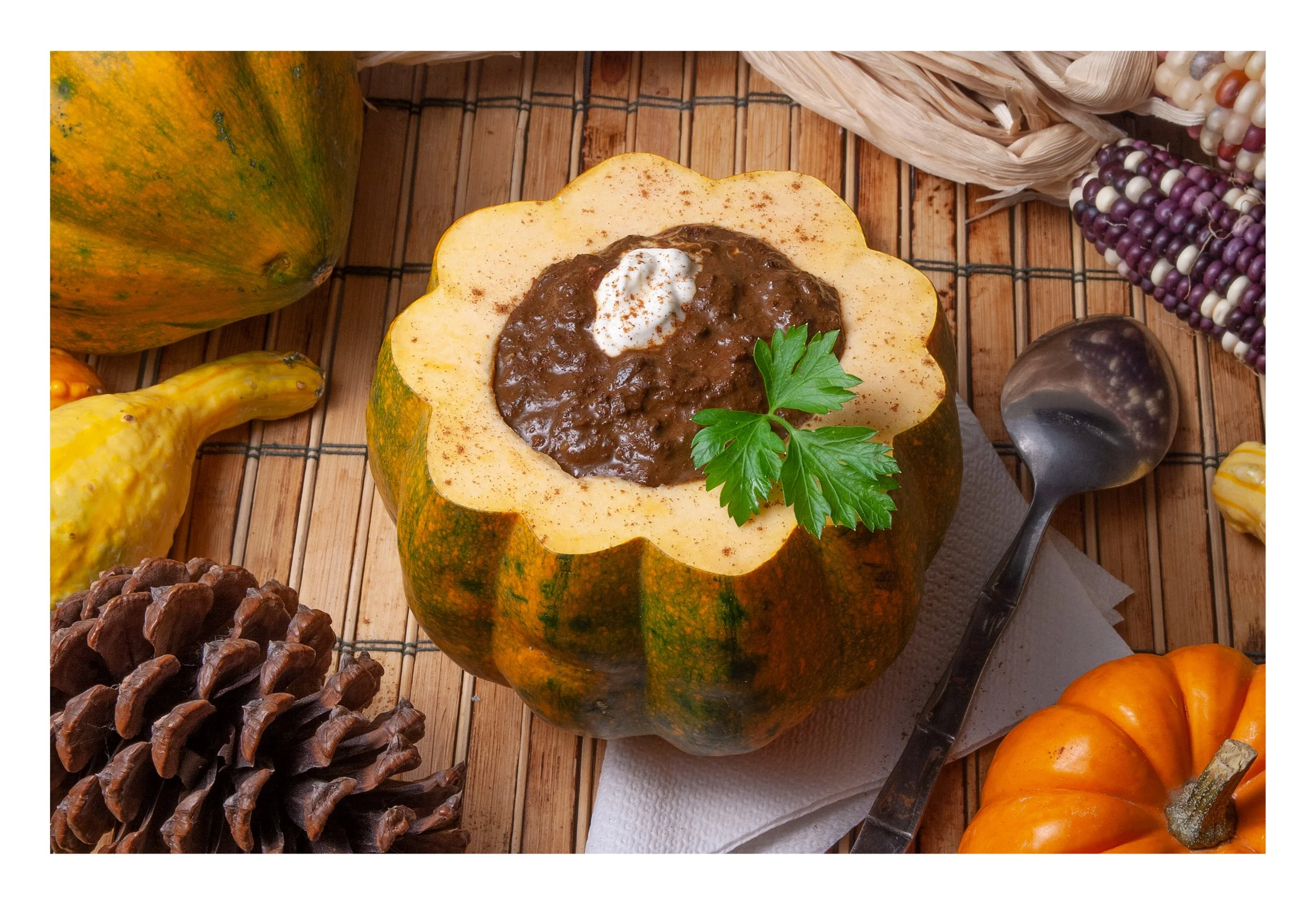
Enter John LaMacchia and his photographic series called Coprophagic Delights. Cold Red Borscht. Apple with Cinnamon à la Mode. Sautéed Mushroom and Onion on Brown Rice. Rum and Raisin Cheesecake. And so on and so forth: entrées, hors d’oeuvres, and desserts, some ostensibly Russian, others as American as apple pie, quite different dishes, but they all have one thing in common: there is always, tastefully decorated, a big and presumably human turd smack in the middle. We all have seen (and maybe been oversaturated by) food pics by now — but hardly images like these. This is food porn in reverse.
“If you compare this series to the rest of my work, it aligns well in the sense that there is a strong duality here: high/low, pretty/ugly, etc.,” LaMacchia says. “The teeth of this idea isn’t necessarily the poop but rather everything else around it. The pedestal it sits on. The camouflage. I always liked the idea that on first inspection the images say one thing, but on another they reveal something else entirely different.”
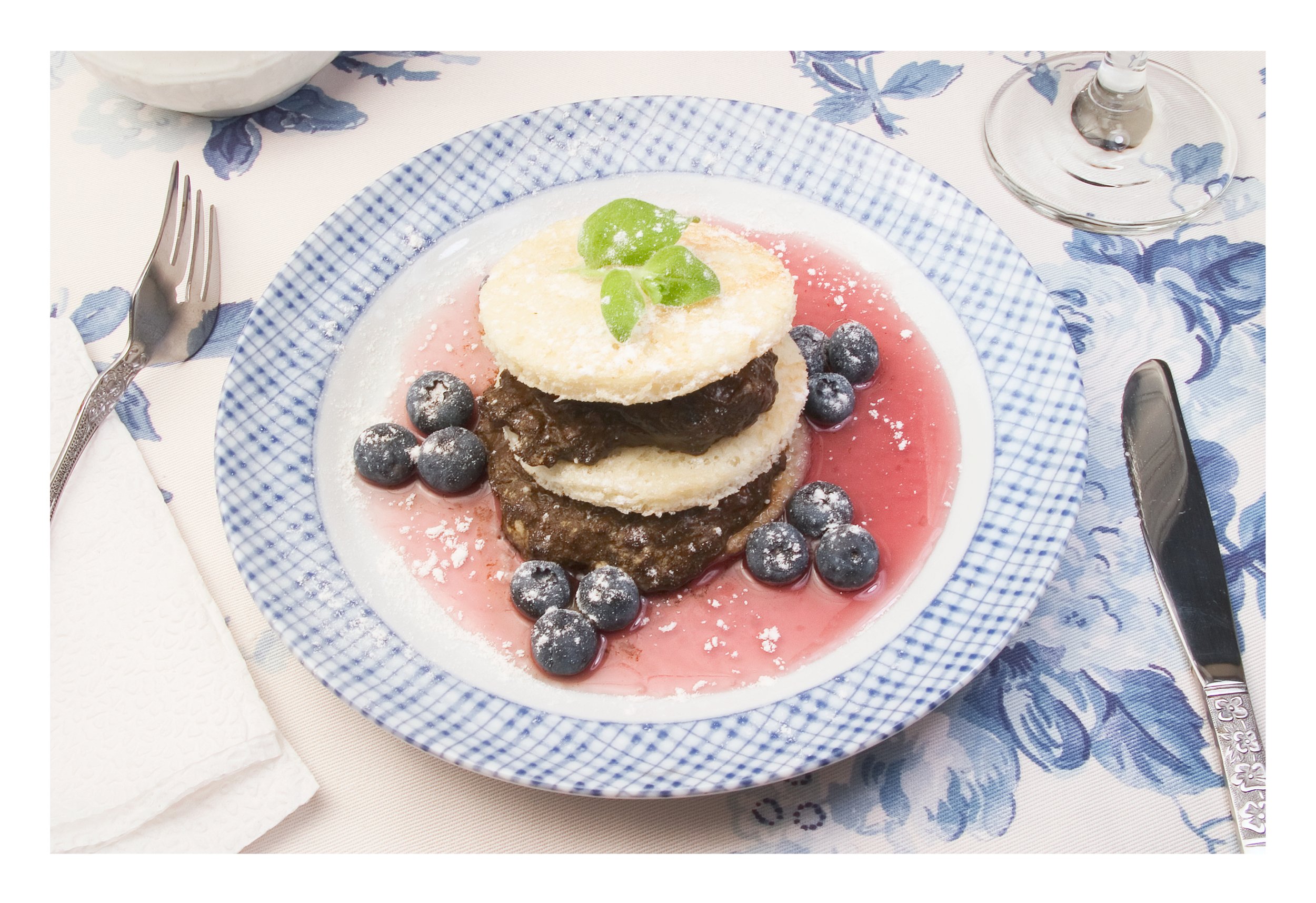
This sentiment echoes, if unconsciously, the matter-of-fact definition of dirt and all things considered filthy that famed Viennese psychoanalyst Sigmund Freud once gave: “Dirt is matter in the wrong place.” What he meant by this is: there is no such thing as dirt — or shit, or smut, or obscenity — in itself. It is only the context that makes it so. (The same thing could, of course, be said about art in general: it is mostly a question of framing.) In a ceramic toilet bowl, for instance, feces are in their “proper” environment—and hence not dirty. On a white ceramic plate, however, sprinkled with cinnamon, spiced with rum, decorated with onions or raisins, they are grossly misplaced.
It is not their substance, but the environment, that makes them so filthy. Put in a culinary context, true shittiness is revealed. Like the fart we hear in the middle of a Mozart sonata in John LaMacchia’s sound installation of the same name, these turds stick out like… well, like shit on a plate.
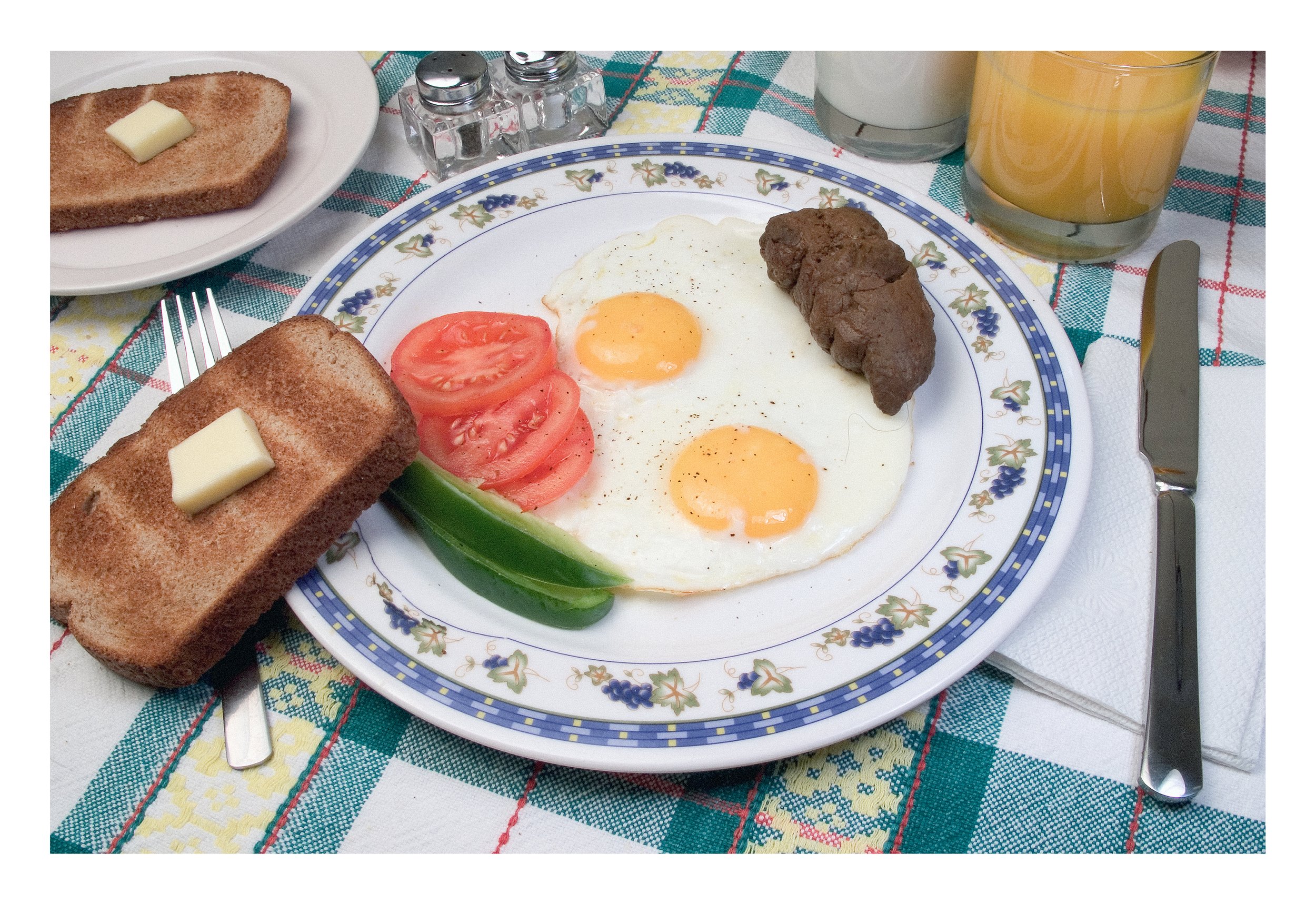
There is some visual trickery going on here. Unlike the libertines in Pasolini’s movie; unlike the rough Swedish soldiers in seventeenth-century Europe; unlike the God of the Old Testament, John LaMacchia doesn’t force us to eat shit (or shit-flavored bread, for that matter). He doesn’t stuff it down our throats — rather, he puts the poop in a different visual vernacular, in a culinary context. He masquerades his dishes as “delights.”
This is the age-old art of persuasion; of seduction, if you will. Glossing over what may at second glance look displeasing; administering the poison in a sugar-coated pill. As in so many of LaMacchia’s works, high and low culture enter a deceptively peaceful and happy alliance.
Two worlds collide — but ever so subtly.
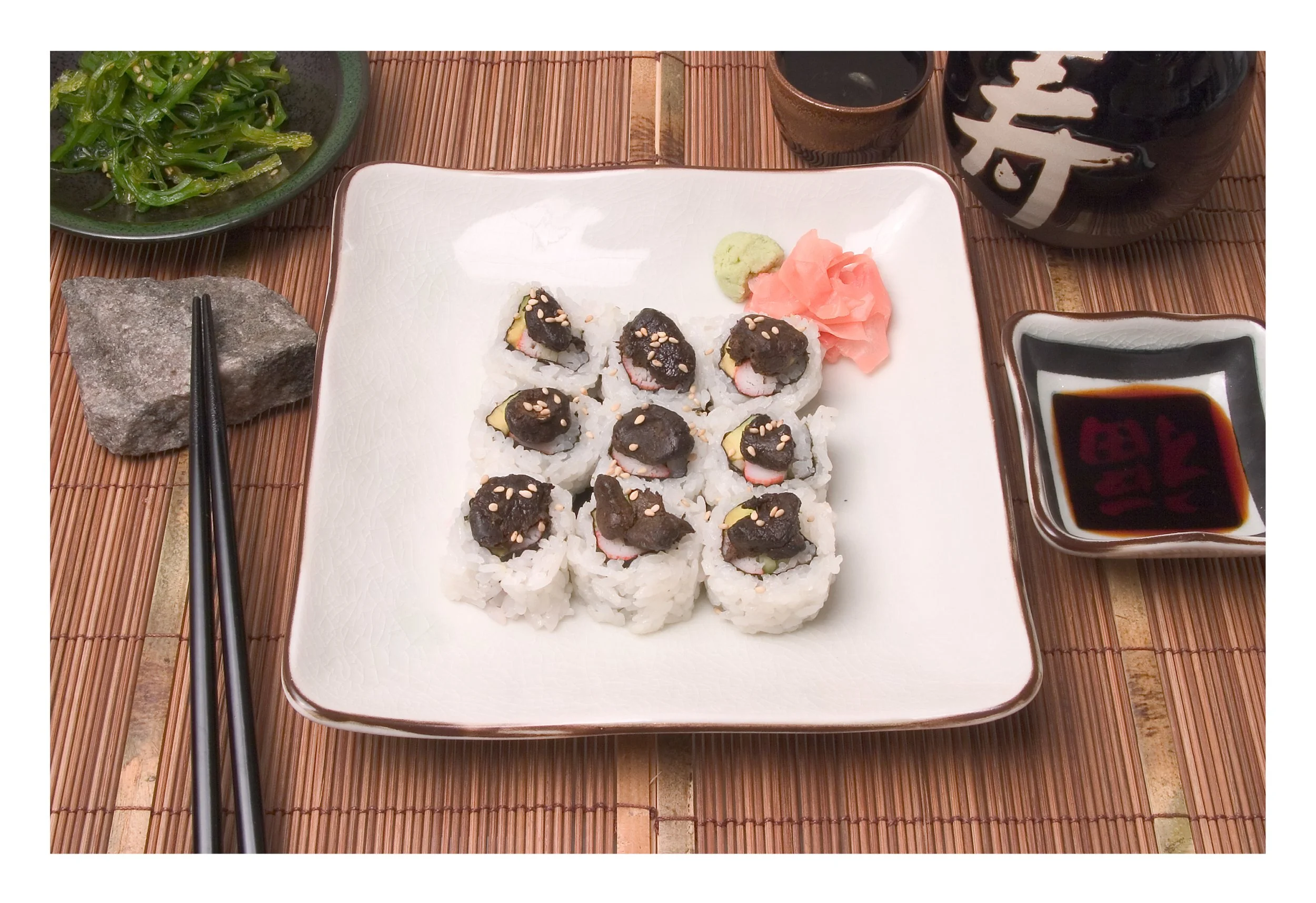
Open questions remain: whose shit is it? How did it get on these plates? And why was it so lovingly arranged? Did some disgruntled prep cook decide to call it quits and leave his poop as a last farewell and fuck-you to the maître d’? Or are these photos advertisements for some specialty restaurant for coprophages? (And yes, they do exist: check the works of Donatien Alphonse François de Sade or have a dip in the deep web.) How expensive are these dishes, anyway, and can you get them to go? As static as these pictures may be, they evoke stories, narratives, bizarre speculations. This is poop for thought.
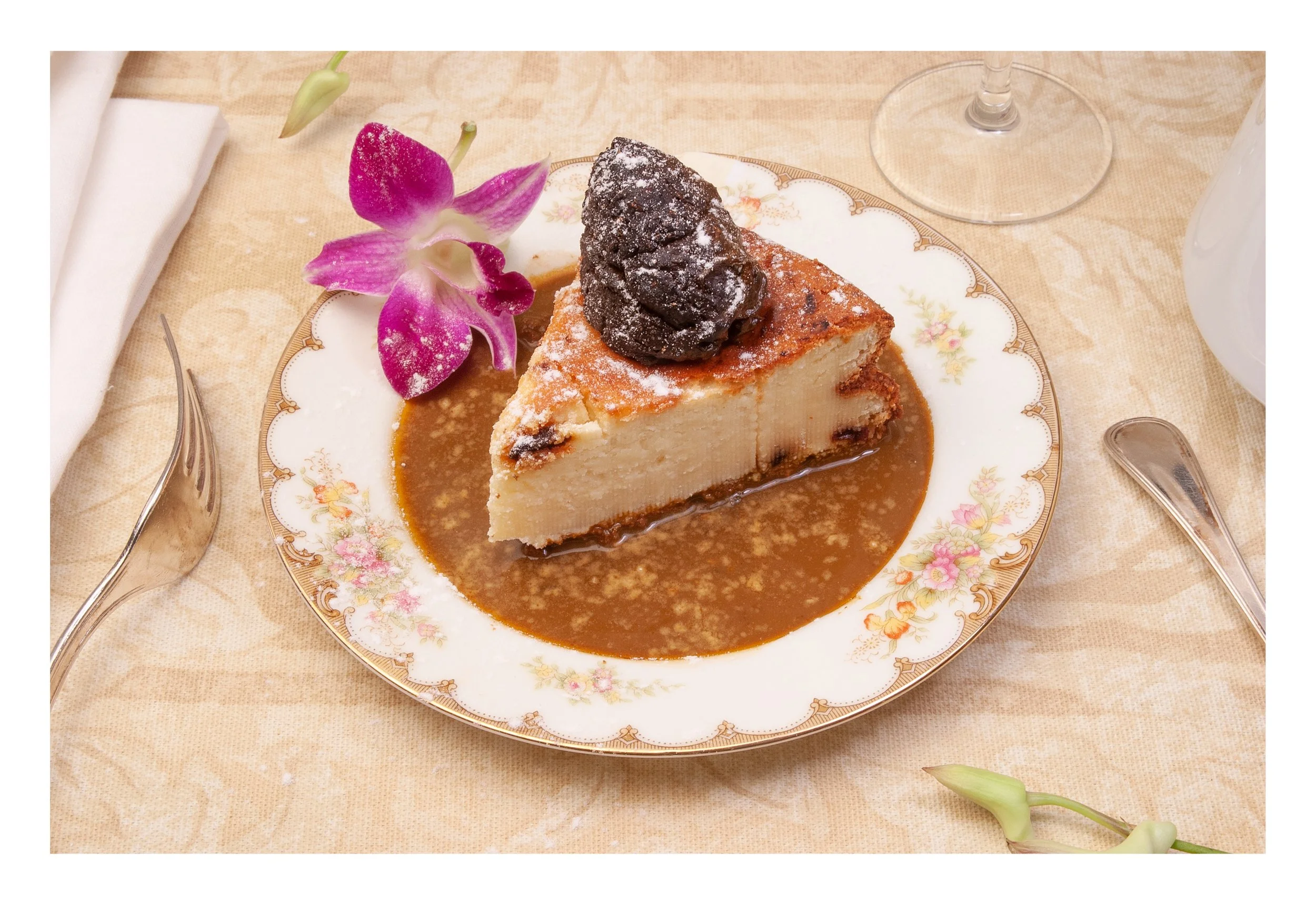
Despite the novel approach to the (dark) matter in question, LaMacchia’s works stand in an honorable artistic tradition. In 1870, Paul Cézanne, when asked by fellow painter Édouard Manet what kind of work he would submit to the Paris Salon, replied: “A pot of shit.” However, he never went through with the idea; the pot remained empty. Until, in 1961, Italian conceptual artist Piero Manzoni famously filled ninety tin cans with his own excrement, thirty grams each, sealed, signed, and labeled them (Merda d’artista, “artist’s shit”), and then proceeded to sell them for the equivalent price of gold. (By now, they are worth much more than that.)
To my best knowledge, nobody has opened these food cans so far — until LaMacchia came along and emptied their contents onto his plates. In so doing, he has opened a can of worms, so to speak. Henceforth, it will be difficult to look at food, menus, or the display pictures in a restaurant again without having to think of feces.
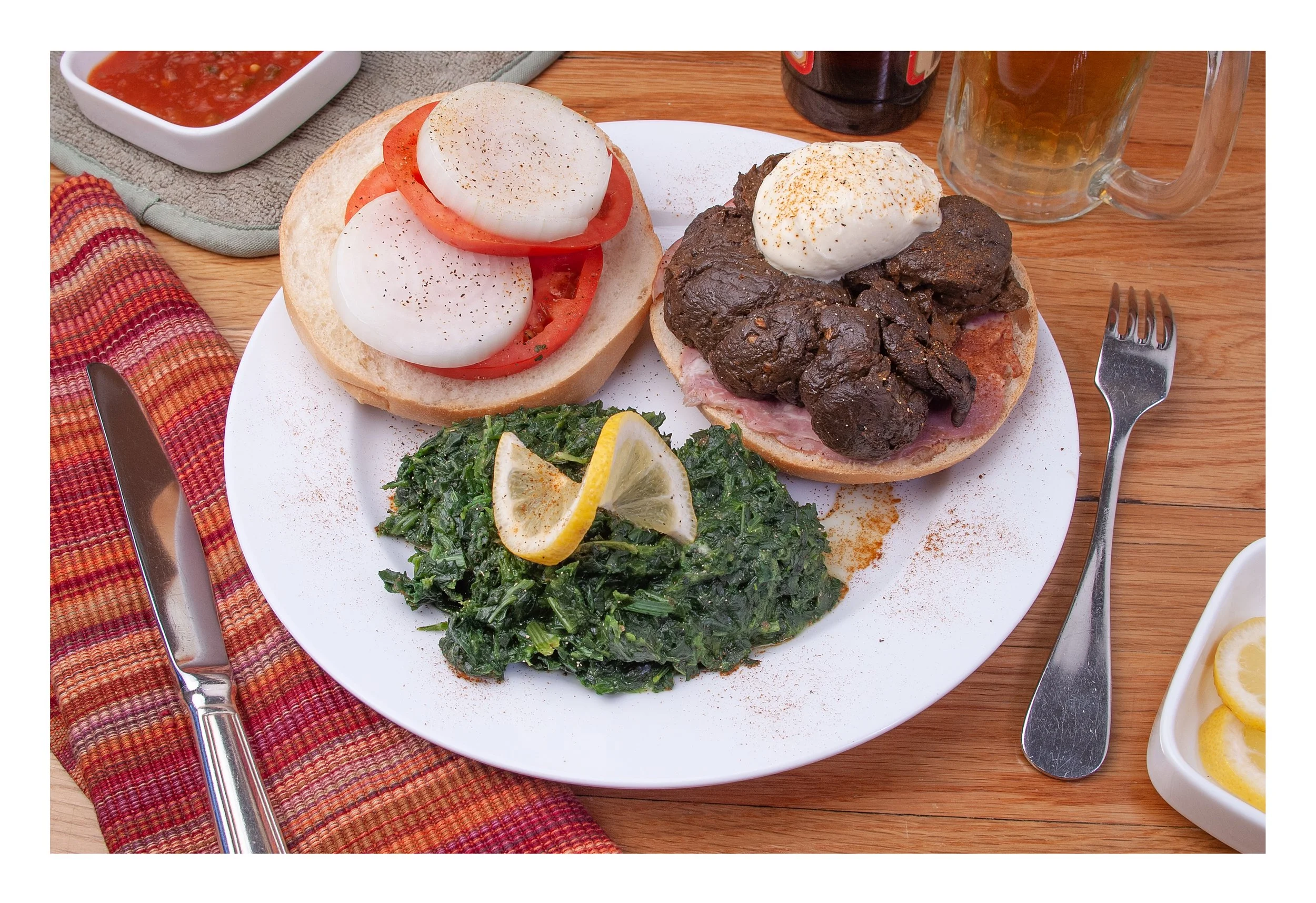
In a way, these images function like a time machine: they show us the shape of shit to come. Because, of course, all the fine food we enjoy, no matter how lovingly prepared, will one day look like the turds in these pictures (in fact, only about twenty-four hours after we have eaten). Our favorite meals are nothing but excrement-to-be: the process of digestion begins with the first bite we take, with the act of chewing, salivating, swallowing; mouth and anus are intricately connected, both on a physical and on a psychosomatic level.
Another artistic tradition raises its lovely head here, namely that of the baroque vanitas painting; except the signs of decay, which the old Flemish masters so subtly and/or allegorically put in the margins of their paintings — all those insects, worms, snails, rotten fruit, and other signs of decay—are in LaMacchia’s photographs moved center stage. This is what will become of your favorite things, they seem to say. Hell… this is what you will become: disintegrating, disturbing, untouchable matter. Shit.
The shit of worms, no less.
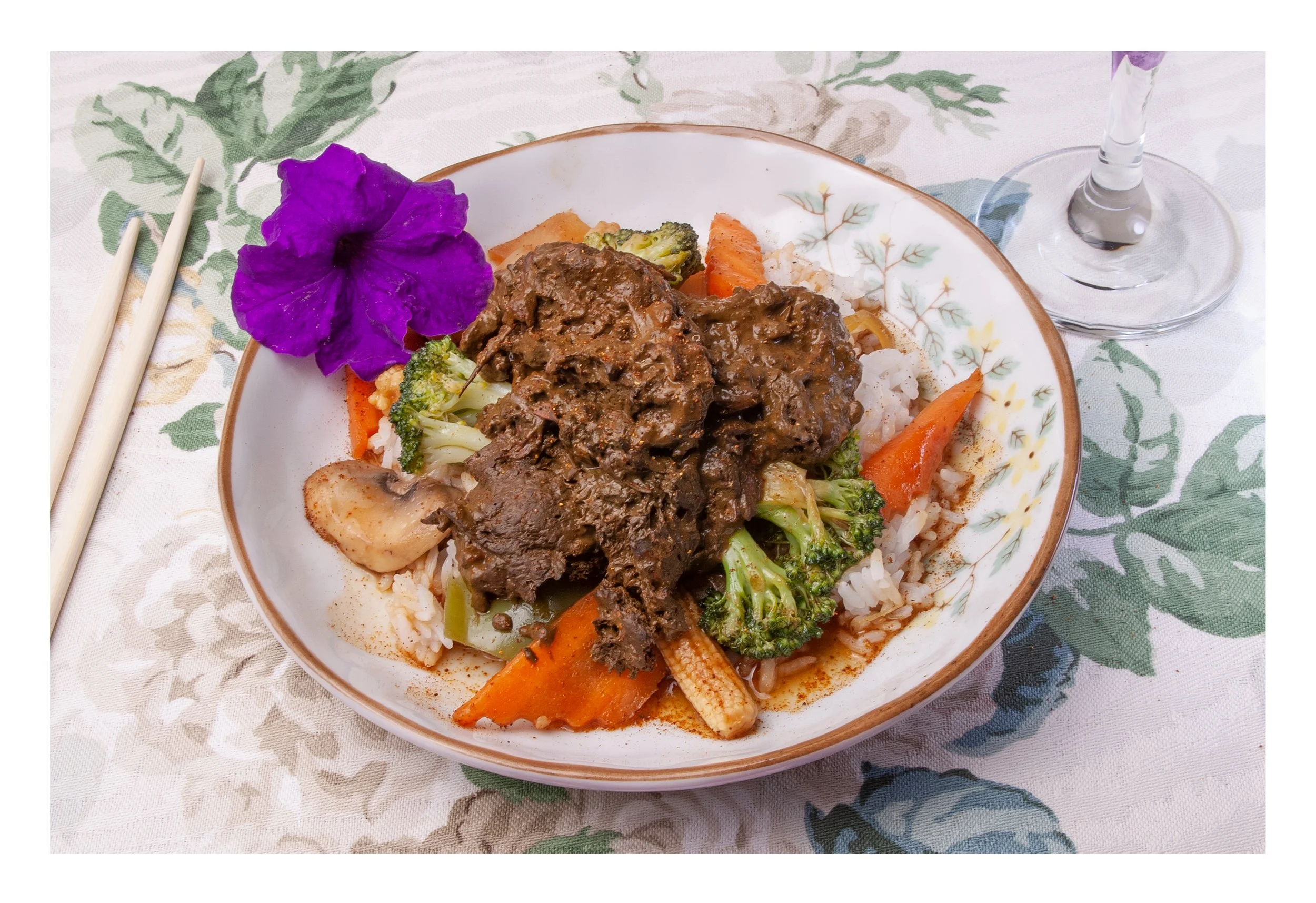
When confronted with an inconvenient truth like that, there are two possible reactions: disgust — or laughter. As unlike as they may seem, they are, in physiological terms, actually quite similar. Both are, in Immanuel Kant’s words, “strong vital reactions” that are meant to ensure our physical integrity and survival. They attempt to cleanse our bodily system of an unwanted intrusion, an alien invasion, anything that is deemed out of place. Our muscles tense… our body begins to shake spasmodically, like the earth before the eruption of a volcano… the mouth opens wide, we gag… and then the bone of contention comes flying out, either accompanied by a slew of vomit or by a mere bit of spittle and laughter.
Personally, in the face of supposedly “revolting” works of literature or art, I prefer the second type of reaction. “The word shit does not stink,” as French philosopher Roland Barthes once said. The same is true of these photographs, of course: as filthy as the subject matter may seem, these pictures are absolutely clean; almost clinically so. In other words: until I am forced to literally partake of my feces, I will continue to laugh at artistic renditions of feces.
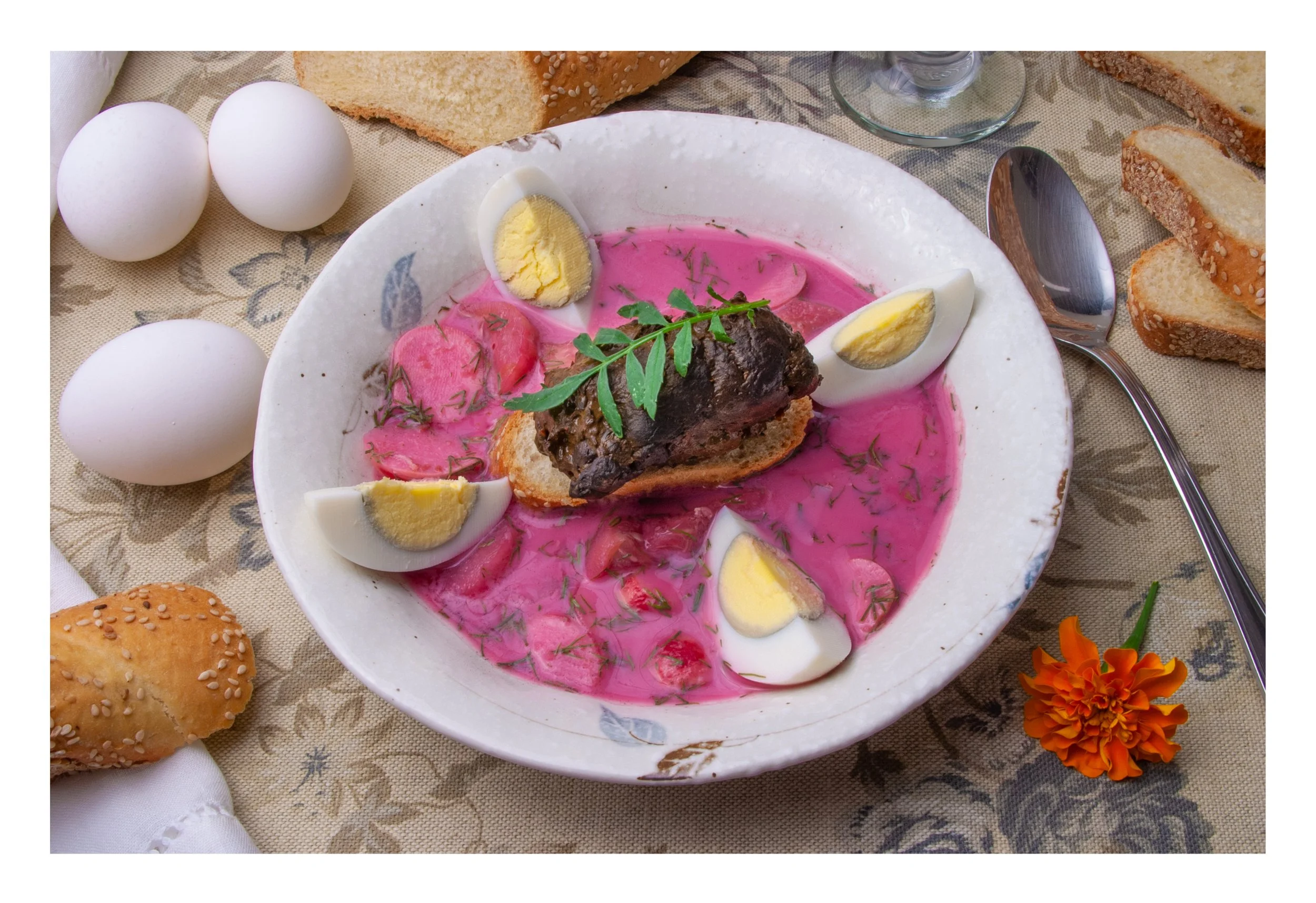
By the way: big and glad Olaf from the aforementioned poem was not really asked to eat shit. He was, in E.E. Cummings’ words, “a conscientious objector” who refused to fight for God and country and declined to kiss the American flag; a refusal for which he was duly tortured to death. I imagine: given the choice between metaphorical and literal shit-eating, he would have opted for one of John LaMacchia’s Coprophagic Delights.